
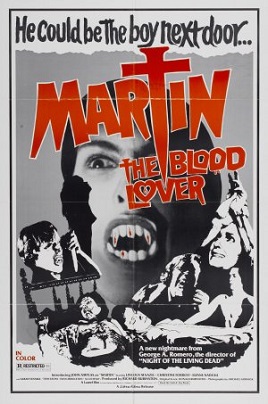
 There have been movies about the Antichrist, but Martin is basically the anti-Dracula. Gone is the sophistication, the suave, debonair worldliness, the verbosity, the overarching confidence, the charm with the ladies. In its stead: a socially awkward, slight, poorly-dressed, laconic, kvetching, virgin.
Leave it to the late (and undeniably great) George Romero, to grace us with such an interesting take on the Nosferatu legend. With his favorite town, Rust Belt Pittsburgh providing a perfectly decaying backdrop, we meet young Martin en route from Indianapolis by train, where he feasts on and assaults a passenger using an anesthetic (he doesn’t want his victims to feel pain, you see). He’s visiting his great uncle, Cuda (Lincoln Maazel), an aging family patriarch with not just one foot in the old country, but seemingly the whole leg as well.
While under Cuda’s roof, Martin (John Amplas) goes to work for the old man at his deli by day, and seeks out victims in his down-time. All the while, he works out his issues through a kind of psychoanalysis session, calling in to a late night crackpot conspiracy radio show as “The Count,” chatting casually about what it’s like to be immortal, and how movies about Dracula get it all wrong.
It’s a funny, terrific conceit, and Martin is a Freudian delight. He can’t find his identity, he’s frustrated, sublimates his sexual drives, and bemoans that “people often don’t say what they mean,” an insight the legendary Viennese doctor would very much appreciate.
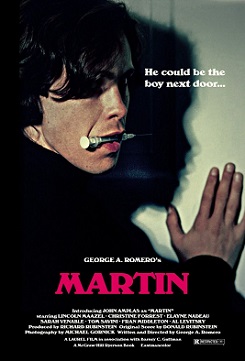 But it’s the relationships, but familial and romantic, that propel this vampire re-imagining.
Of particular interest, Martin’s seduction at the hands of lonely neighbor Mrs Santini (Elyane Nadeau), whose slimy husband is out with a different mistress every night. Their connection is utterly charming and believable, and again, showcases Romero’s uncanny ability to make the inhumane human (see, the compliant and lovable captive zombie “Bub” from Day of the Dead).
Will the love of a woman, tame this nocturnal beast? Will his public disclosures about the vampire lifestyle, prove his downfall? Who is Cuda, really?
And perhaps the most compelling question of all…whether Martin is actually Nosferatu or merely a sociopath with vampiric tendencies…It’s just another layer of interest for an altogether interesting film.
**** (out of 5)
[Check out our discussion of George Romero’s Martin on the Really Awful Movies Podcast!]


 Really Awful Movies