 There are two things you might expect to scream like banshees — heavy metal screamers and well, banshees. Horror and metal share an affinity for the macabre and both frequently subject their audiences to unimaginable abuse (check out this toe-tapper Day 69 by the death metal band Decapitated) and both receive critical drubbings in the press. Metal’s earliest practitioners (Black Sabbath / Alice Cooper) dabbled in creepy imaginary and spree killers rarely point to the music of Bill Withers as having set them off. Here are examples of a match made in hell: metal musicians acting in horror films:
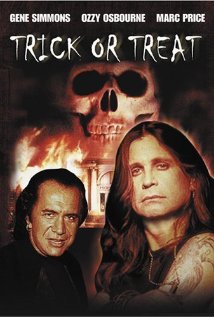
1. Gene Simmons and 2. Ozzy Osbourne in Trick or Treat
This 80s schlocker is the cinematic equivalent of ordering 6 McNuggets, opening up the lid and finding 8 since you get two rockers for the price of one. The film features both the God of Thunder and the Prince of Darkness well before they shed their last remnants of dignity alongside their wives on reality TV.
You also get Mark Price, better known as Skippy from Family Ties. Skippy, sporting a fairly-impressive mullet, plays headbanger Eddie who is obsessed with devil-worshipping, snake-fellating rocker Sammi Curr. When Sammi dies mysteriously, Eddie summons the rocker back from the dead to do a little shouting with the devil (as an aside, WASP’s Blackie Lawless was originally slated for the role, but probably had a good agent).
Now think of the brillo-pad headed, plastic surgery nightmare that is Gene Simmons of today. Got it? Good. Now erase that horror and replace it with the lean, mean Animalize/Asylum era Gene who was just starting to loosen his grasp on the plot rather than letting it go completely. That’s the Gene you get in Trick or Treat.
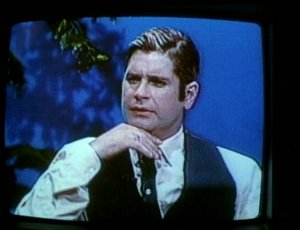 Simmons plays Nuke, a radio DJ who gives Eddie the only copy of Curr’s last and only unreleased album, “Songs in the Key of Death (Stevie Wonder probably didn’t see that one coming, nor that jokes about his sight would have this much staying power) and Gene actually acquits himself rather well. He’s cool, emotive and seems genuinely enthused to be there. The same cannot be said about his portly presence on the last three or four KISS tours.
Ozzy, on the other hand, has about two minutes of screen time playing Rev. Aaron Gilstrom, an evangelist and moral crusader who hates rock music. Still, Oz makes the most of his brief screen time by delivering a virtuoso performance worthy of…ah, who am I kidding here? This is Ozzy! He merely stares blankly while blathering semi-coherent drivel, recreating, by all accounts, how he behaved for most of the late 80s. For a more horrific Osbourne performance, see him cooking bacon in his bathrobe in The Decline of Western Civilization Part II: The Metal Years.
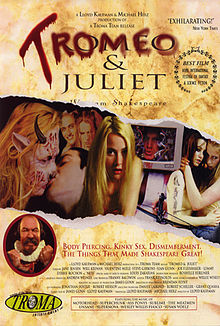 3. Lemmy in Tromeo and Juliet
Lemmy Kilminster is, of course, the lead singer/shouter/bassist (and only constant member) of power trio Motorhead. Lemmy has been called “heavy metal personified [in] a single person.” Best known for Ace of Spades, Motorhead has been ripping out ferocious metal since 1977. Moterhead’s best songs such as Jailbait, (We are) The Road Crew, Overkill and Iron First tear out of speakers at a breakneck pace.
Troma is North America’s longest-running independent studio known for churning out and distributing decidedly non-PC films chock-a-block with gratuitous nudity, relentless violence and nauseating gore. Many dismiss Troma films as grade-Z filmmaking, but in doing so they overlook the sly social commentary and biting satire underlying many offerings.
Lemmy has appeared in a number of Troma films including Terror Firmer and Citizen Toxie. He has never asked for a single red-cent for acting in any one of them. Instead, his only two requests are a bottle of Maker’s Mark and two “Tromettes” to talk to whilst filming.
His most memorable role is in what is arguably Troma’s best flick, Tromeo and Juliet. In this twisted punk adaptation of the Bard, Lemmy serves as the narrator, spouting iambic pentameter in his own inimitable mole-y, marble-mouthed way. In doing so, Lemmy adds a further touch of crass to a film just oozing with it.
 4. Alice Cooper in Monster Dog
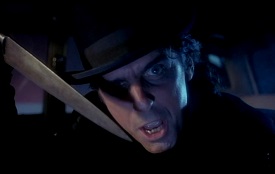
If there’s one rocker whose name is synonymous with horror, it’s Alice Cooper. Cooper, the granddaddy of shock rock, is credited as the artist who “first introduced horror imagery to rock n’roll, and whose stagecraft and showmanship have permanently transformed the genre”. Cooper was singing about dead babies and feeding Frankensteins and dismembering mannequins, decapitating furry green monsters and sacrificing chickens while Marilyn Manson was still pooping in his diapers. Thus, if only one rocker were to make the jump to horror flicks, it had to be the Coop.
And indeed, Cooper made an indelible impression in John Carpenter’s Prince of Darkness, playing a schizophrenic vagrant possessed by the concentrated essence of Satan. Cooper also appeared uncredited in Freddy’s Dead: The Final Nightmare, playing the father of ol’ pizza-face himself.
Less noted is Monster Dog from 1984, a Spanish/Italian co-production in which a short-haired Copper plays pop-star Vince Raven who returns to his hometown to shoot a video. Unfortunately, his hometown happens to be plagued by werewolves. The film was shot at a time when Cooper’s life and career were in a period of stasis; following his alcoholism-induced hospitalization where he nearly died but before his triumphant 1986 Constrictor comeback. The newly-sober Cooper seems game but the movie is a poorly-conceived and produced mess. Amazingly, Cooper did not re-record his lines for the English-language version of the film. Instead, his speaking voice is provided by the milquetoast-sounding Winnipegger Ted Rusoff. Fun Fact: The director of Monster Dog, Claudio Fragasso, later went on to co-write and direct “Best Worst Movie” Troll 2.
 5. Jon Mikl Thor in Rock N’ Roll Nightmare
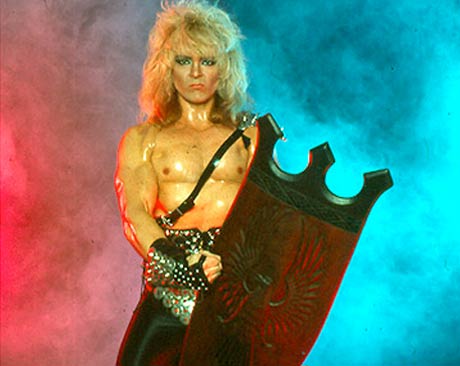
Ever heard of Jon Mikl Thor? Even here in his native Canada, Thor remains somewhat of a *ahem* fringe figure in the world of metal. Bodybuilder turned frontman of the band that bears his surname; Jon Mikl parlayed a passing resemblance to the Marvel comic Norse God character (really just a flowing blond mane and not much else) into a two-decade plus music career.
Thor the band were known less for their hits and more for the on-stage antics of their charismatic (perhaps psychotic) lead singer who would bend solid steel bars with his teeth and have solid concrete blocks smashed off his chest with a sledgehammer.
In 1987, Jon Mikl starred in Rock N’ Roll Nightmare, a straight-to video Canuck horror film that, true to its name, is quite the nightmare. Shot in 10 days for only $50,000, Rock N’ Roll Nightmare begins with a dollar-store skeleton popping out of an oven and ends with a battle between nothing less than the twin forces of heaven and hell themselves. In Hell’s corner is a satanic marionette while heaven is represented by an oil-slathered Thor, clad in little more than a black studded cod-piece and a smile. As one watches the two writhe and flail about in a sweaty struggle for dominion eternal, one begins to ponder the benefits of atheism. Required viewing for aficionados of astoundingly inept cinema, autumnal northern Ontario scenery and manly men wearing copious amounts of mousse and makeup.
 6. Dee Snider in Strangeland
Dee of course, is best known for Twisted Sister and playing foil to robber baron Donald Trump on The Apprentice.
He’s also known for his spirited, articulate defence of the First Amendment along with the inimitable Frank Zappa in a high-level tilt against a censorious Senate hearing committee, seeking to place warning labels on metal.
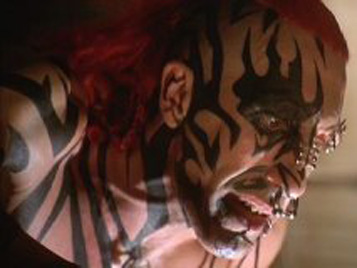
In Strangeland, he plays Captain Howdy (a tribute to The Exorcist?), a mysterious chat-room “student” who’s into:
a) body modification, b) sadism and c) luring unwitting teens into his torture chambers.
He’s captured and institutionalized by the cop dad of one of the victims, does his time and is then declared no danger to the community as long as he’s on his meds. But upon his release, he’s not exactly welcomed with open arms by townsfolk and mayhem ensues.
Based loosely on the Twisted Sister song “Horror-Teria” from their album “Stay Hungry.”


 Really Awful Movies