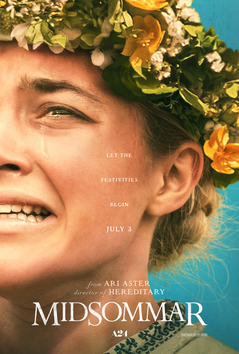
After blasting out of the gate with a parricide shocker, Midsommar steers viewers into a more conventional folk horror direction, which at times becomes an uneven viewing experience.
Much like he did in Hereditary, director Ari Aster is mining grief here, courtesy of survivor Dani (Florence Pugh of Oppenheimer, who gives a strong, grounded performance). Despite being inconsolable, Dani is cajoled by her beau and two friends into taking a trip to rural Sweden for a midsummer festival, because who doesn’t like a rager, especially after losing three members of your immediate family?
A couple of the fellow travellers are, what else? anthropologists whose research interests largely align with Nordic lore. Convenient that.
The friends drive through the Scandinavian countryside, with Aster’s camera taking viewers upside down, a symbolically nauseating move to upend your senses, perhaps?
Upon their arrival, they’re joined by a couple of bland Brits who have no backstory and seem to be there to go missing and/or add to a body count.
When the arrivals are offered psychedelics by the bearded commune denizens who despite being bedecked in culty, flowing robes, don’t even disrobe or partake, it makes this viewer wonder, what kind of crappy cult is this?
Anyway, all signs point to this crew being some kind of ABBA Branch Davidians (hell, one character even JOKES about how they resemble Waco acolytes). But this doesn’t stop one of the two academic interlopers to dispassionately/rudely pepper the group with questions about their weird religious practises, or another member of their ranks from desecrating one of their totem.
In a way, Midsommar almost follows tropes laid out by Italian cannibal features: the academics don’t think anything is amiss about this group of glassy-eyed, doily-wearing maypole swingers, despite this being painfully obvious to the viewer, who is bombarded with strange imagery and “weird stuff is happening here” signposts.
The commune operates in an almost Logan’s Run style conceit whereby members reaching a certain age are put out to pasture, although in Midsommar this is wholly voluntary – and in one of the most intense scenes, we get to see a couple’s demise.
Some of this is very engaging and arresting, especially the first hour, and sunny visuals straight out of Tenebre are a welcome departure from the shadowy darks deployed in most horrors. In the backend, however, people go missing and nobody seems to notice.
And with nothing but sketchily drawn characters (Dani notwithstanding) a 2.5-hour runtime gets to be tough slogging indeed.
*** (out of 5)
 Really Awful Movies