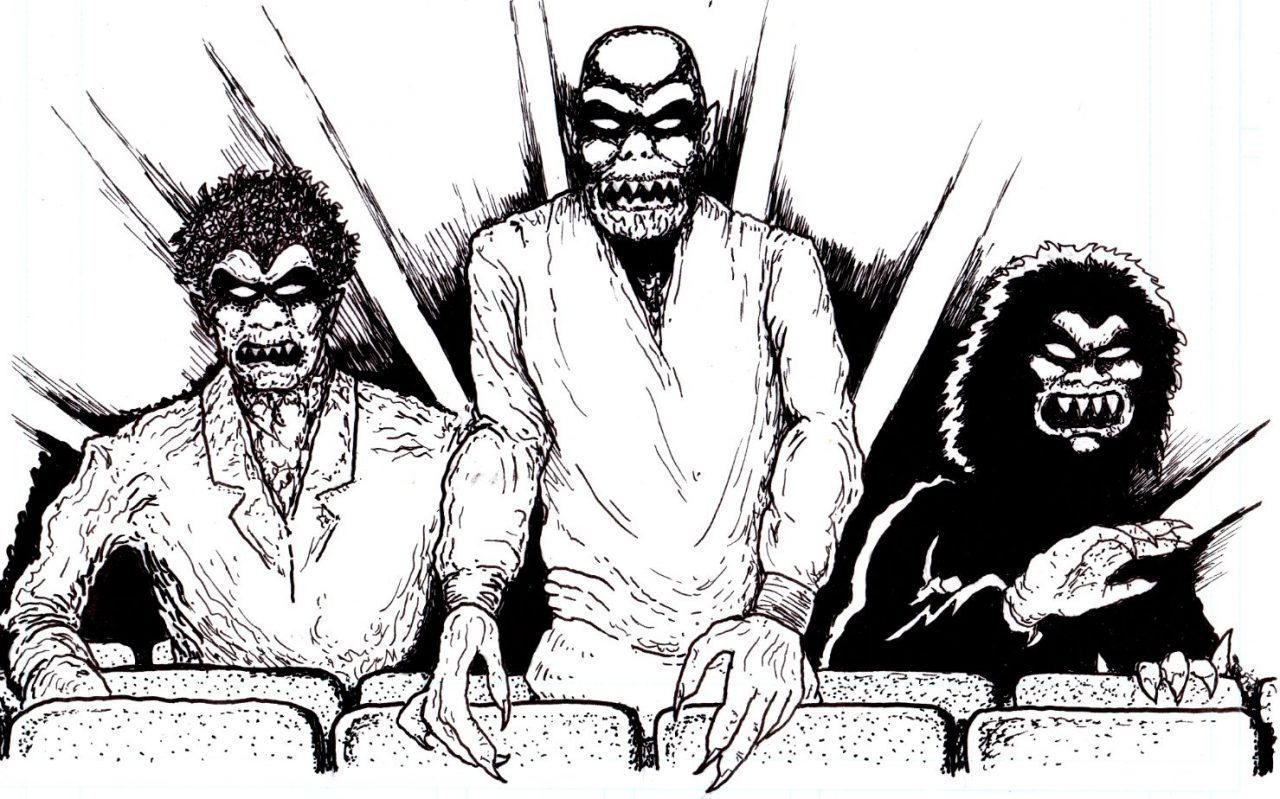
 It was the mid 90s when I first began to seriously delve into the world of horror, cult, and genre cinema. Most of my adolescent life was spent shying away from anything that would disturb my already fragile psyche, so the horror section of the video store was a place I largely eschewed. That all changed when I decided to give Friday the 13th : The Final Chapter a chance, and something dormant awakened inside me: the love for and curiosity about anything morbid, frightening, transgressive, extreme and off-the-wall.
Becoming a budding aficionado of cult cinema then meant doing lots of homework – namely reading and researching the thousands of mind-altering films out there that weren’t readily available at your local Blockbuster. At that time, VHS was still the dominant mode of home movie consumption, and DVDs were just starting to penetrate the market (an average player at the time would set you back about $350.00). The Internet was in it’s infancy, and accessing it generally required availing yourself of a 10-hour American Online trial so as to visit primitive-by-today’s-standards sites or using something entitled Netscape Navigator.
Hence, if one wanted to discover films outside of the mainstream, one would have to read…books. For me, that meant visiting the local library on a weekly basis, scanning the shelves in the cinema section for any tome with the word “Horror”, “Cult”, or “Alternative” in the title. I would then find a quiet corner to sit in and spend hours poring through the volumes – reading, learning, discovering, and of course, taking copious notes.
Not one book was definitive, but each publication turned me on to something or someone – an Argento here, a Jodorowsky there, a little sexploitation in this tome, a taste of Mexsploitation in that one.
In retrospect, I would not trade those hours spent immersing myself in the written words bound in books for any other sort of film education. Reading about the films was often times as exciting (and sometimes even more so) as actually watching the movies. There was nothing like a good, well-written essay about some obscure, hard-to-find Category III Asian shocker to truly whet the appetite for the main course (viewing said film, naturally).
Had it been available then, Cult Cinema: An Arrow Video Companion would have been a book I would have pored over intently, ingesting every word and assimilating every new discovery. Shit, it wasn’t available then, but it is now, and I still pored through it enthusiastically, enjoying each and every syllable.
Cult Cinema is a lovely hardback collection of essays by some of the top critics, historians, and aficionados of genre cinema. No, it’s not definitive, but no book could, or for that matter, should be. What it is is a generous tasting platter of superbly written treatises divided into five sections – Cult Movies, Cult Directors, Cult Actors, Cult Genres, and Cult Distribution.
Many of these essays have previously appeared in booklets in Arrow Video releases (Arrow Video known for their pristine transfers, copious extra features, and lavish packaging featuring insert booklets and alternative art; pretty much The Criterion Collection of cult and genre), and some specially written for this volume. A fine introduction by British filmmaker Ben Wheatley (Kill List, Sightseers, A Field in England) sets the table and then it’s on to the buffet.
 Highlight essays include Alan Jones contextual analysis of Deep Red within Dario Argento’s career, Stephen Thrower’s dissection of Lucio Fulci’s Zombie Flesh Eaters, Tom Mes’ insightful analysis of Kinji Fukasaku’s Battle Royale, Calum Vatnsdal’s look at the early, student films of David Cronenberg, David Flint’s celebration of Tinto Brass, John Kenneth Muir’s assessment of George A. Romero as “Horror’s Great Sociologist”, Vic Pratt’s look at Corman’s The Raven through the lens of the heretofore unseen comedic brilliance of Boris Karloff, David Del Valle’s wonderful examination of the career of Vincent Price, Cullen Galagher’s assessment of the cultural importance of Pam Grier, Michael Mackenzie’s look at the Giallo, Paul Corupe’s historical examination of Canadian exploitation cinema (Canuxsploitation), and Robin Bougie’s exploration of the “The Golden Age of Exploitation”, whereby he traces exploitation cinema’s roots all the way back to 1930.
Seasoned genre vets will appreciate the erudite look at some of their favorite films, actors and genres and may even learn something new to boot. (This reviewer had no idea that after Last House on the Left, Wes Craven had a brief dalliance in the porn business, editing a number of hardcore films and even briefly appearing in one!) And those new to the world of cult will find a smorgasbord of titles to salivate over. And like Kevin Gilvear writes in his essay on the Asian DVD explosion, “it only ever takes one film for someone to decide that they want to discover more.” Amen to that!
Cult Cinema: An Arrow Video Companion can be pre-ordered here.

 Really Awful Movies