The Last House on the Left

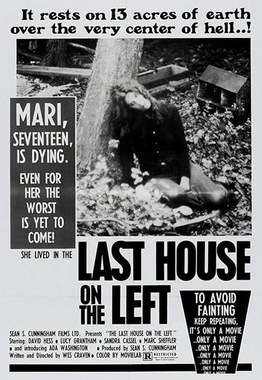
With no apologies to fans of Scream, The Last House on the Left is Wes Craven’s second best, a masterpiece that’s a cut below the all-time great A Nightmare on Elm Street because of the latter’s sublime creativity.

This one’s a gut-punch, as unrelenting and uncompromising as they come. And one of the more harrowing viewing experiences, which can only be compared to the very best of the French new wave (or worst, however you see it) or exploitation fare by Ruggero Deodato or Jorg Buttgereit.

The story is simple: two teen pals are off to a music festival. The answer to the question, ‘what could possibly go wrong there?’ in real life, was answered on October 7 by Islamist s*it bags but in the movie, evil is in the form of a foursome.

Escaped cons, the subject of an emergency radio bulletin, are led by Krug (played by a menacing David Hess, who essential reprised the role for The House on the Edge of the Park, a de facto Italian remake of LHOTL). They kidnap/trap the weed-seeking would-be concertgoers inside a seedy Brooklyn apartment and drive them out into the Connecticut woods.

As Norm MacDonald quipped, in his outstanding 12-minute joke, “Oh fuck, not the woods! Nothing good ever happens in the woods.”

And this 1972 effort proves as much.

The psychopaths eventually get their comeuppance when they stumble upon a farm house, whose occupants – Good Samaritans a doc and his wife – invite them inside and turn out to be formidable adversaries.

The coda is a barnburner, but the whole thing is as bleak and as terrifying as any horror ever committed to celluloid. Right out of the gate you get a Texas Chainsaw Massacre-esque crawler, about how the events you are about to witness are real.

And they might as well be, what with the cinema verite feel, exploited in every sense of the word, in films like Cannibal Ferox.

Craven’s directorial debut plays to his strengths as a neophyte filmmaker. The shots are simple and effect, absent unnecessary frills. The camera just gazes at the gruesome proceedings.

**** (out of 5)

[Fans of this site can check out the Really Awful Movies Podcast discussion of The Last House on the Left].

When Evil Lurks

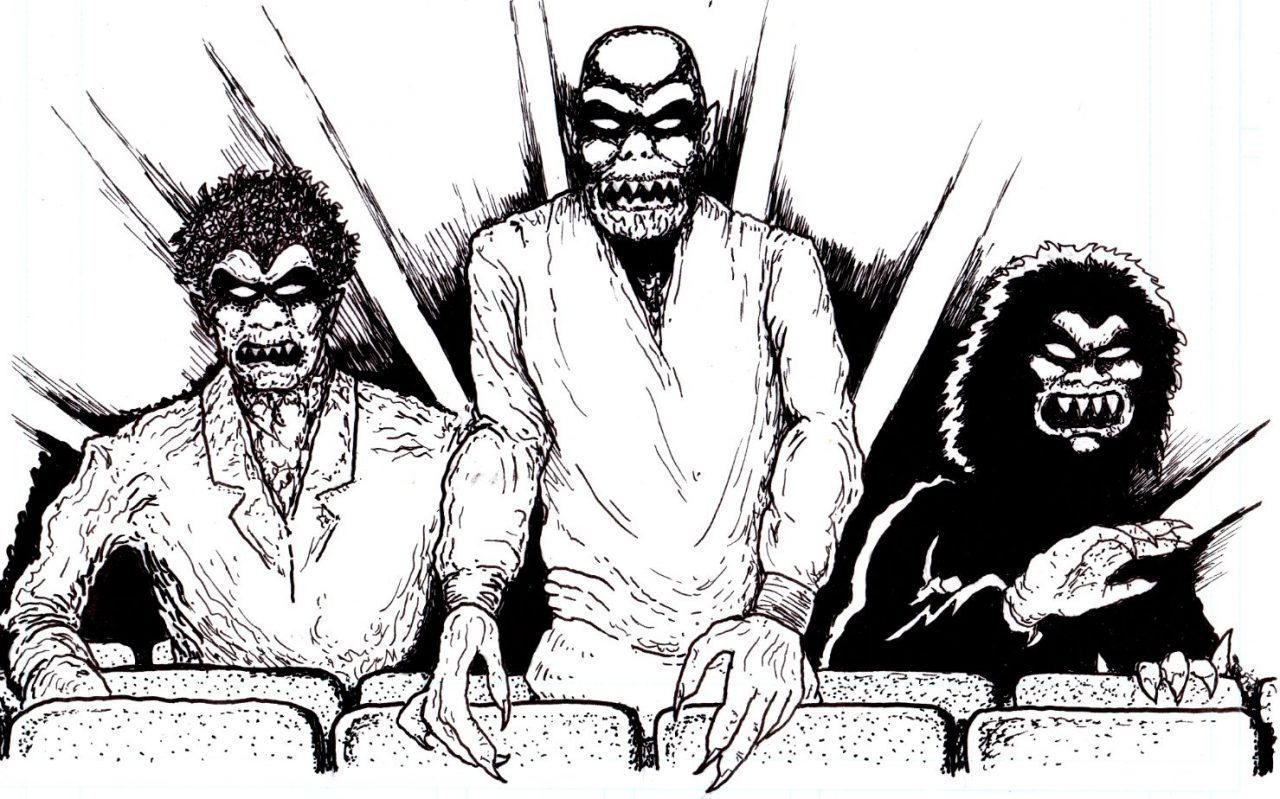
Why Shudder opted for bichrome Children of the Corn-styled thumbnail art, rather than the terrifying Dali-esque almost AI rustic vibes (above) to push When Evil Lurks is anyone’s guess.

It might be that the subscription video service wanted to lure in viewers of more conventional slasher fare, a fool’s gambit, as streaming site subs are now almost hardwired to engage with what they really want and horror aficionados want what’s been promised.

For example, unsuspecting viewers of Skinamarink were presented with an arthouse film. They then (somewhat unfairly) dubbed the slow burn affair in which technically little actually happens, “boring,” perhaps the laziest and cynical adjective in film criticism. After all, something can be boring even if things are constantly happening – witness the typical people stranded in the woods slasher.

When Evil Lurks has enough “happening” and is so expectation-defying, that it SHOULD satiate horror hounds and is easily the best horror of 2023. The scene depicted in the poster art, is one for the ages.

Brothers Pedro and Jaime, out with their dogs in the forest, come across a corpse, what can best be described as a guy who’s half the man he used to be, har har. The dogs lick the body, and we as horror viewers soon suspect we are going to seeing something that is completely different.

The duo ventures forward, coming across a local shack where they encounter a demon-possessed “Rotten,” which almost conjures up the vomit inducing gluttony victim from Se7en. The bros soon find out that the corpulent fellow is not the only Rotten around, and decide to get out of Dodge. But a standard virus-run-amok, this is not.

To disclose anymore would do this genre-bender a disservice. Part zombie, part possession, part hicksploitation flick, part god knows what, When Evil Lurks builds its only little contained universe. And it sets the wild proceedings against the backdrop of spousal discord and intensely compelling family drama too, and does so very effectively.

This reviewer has come across two Argentinian horror films, Terrified (2017) and this. And they both feature Demián Rugna in the director’s chair. What a talent.

When Evil Lurks debuted at TIFF’s Midnight Madness, and was described as “escalating terror with a brutality that recalls the gory extremities of Lucio Fulci’s City of the Living Dead.” Amen.

**** (out of 5)